Research
Seeing quantum states through their response.
We turn defects, magnetic fields, interfaces, and boundaries into microscopic probes of symmetry, topology, and collective electronic order.
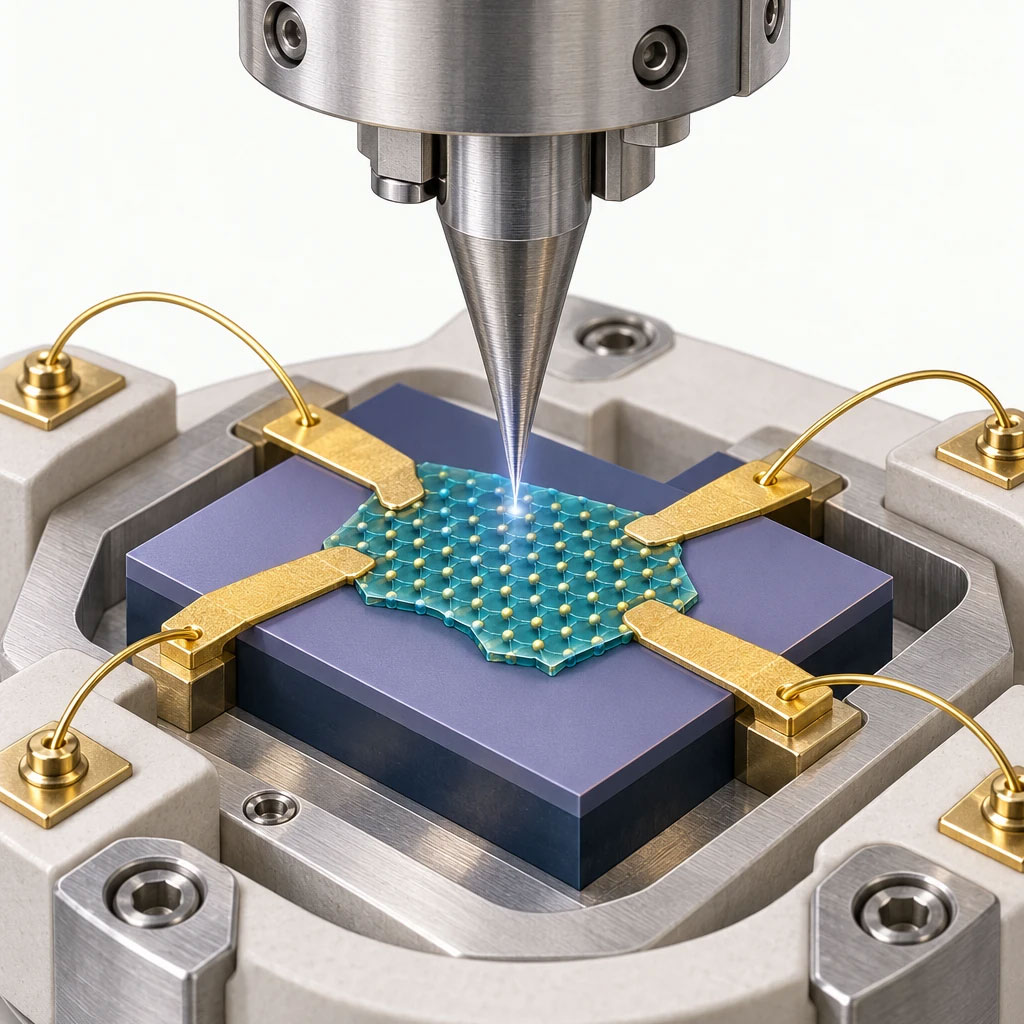

Unconventional superconductivity
Superconductors with fundamentally different pairing symmetries can produce deceptively similar tunneling spectra. We combine atomic-scale spectroscopy with phase-sensitive perturbations to determine how electrons pair and how the order parameter responds to defects, magnetic fields, confinement, and reduced dimensionality.
Our work spans kagome superconductors, layered transition-metal dichalcogenides, and other material platforms where multiple bands, broken symmetries, or strong spin–orbit coupling can stabilize unconventional states.
- What is the phase and symmetry of the superconducting order parameter?
- How do impurities distinguish sign-preserving and sign-changing pairing?
- How do interfaces and dimensionality reshape superconductivity?
Electronic topology
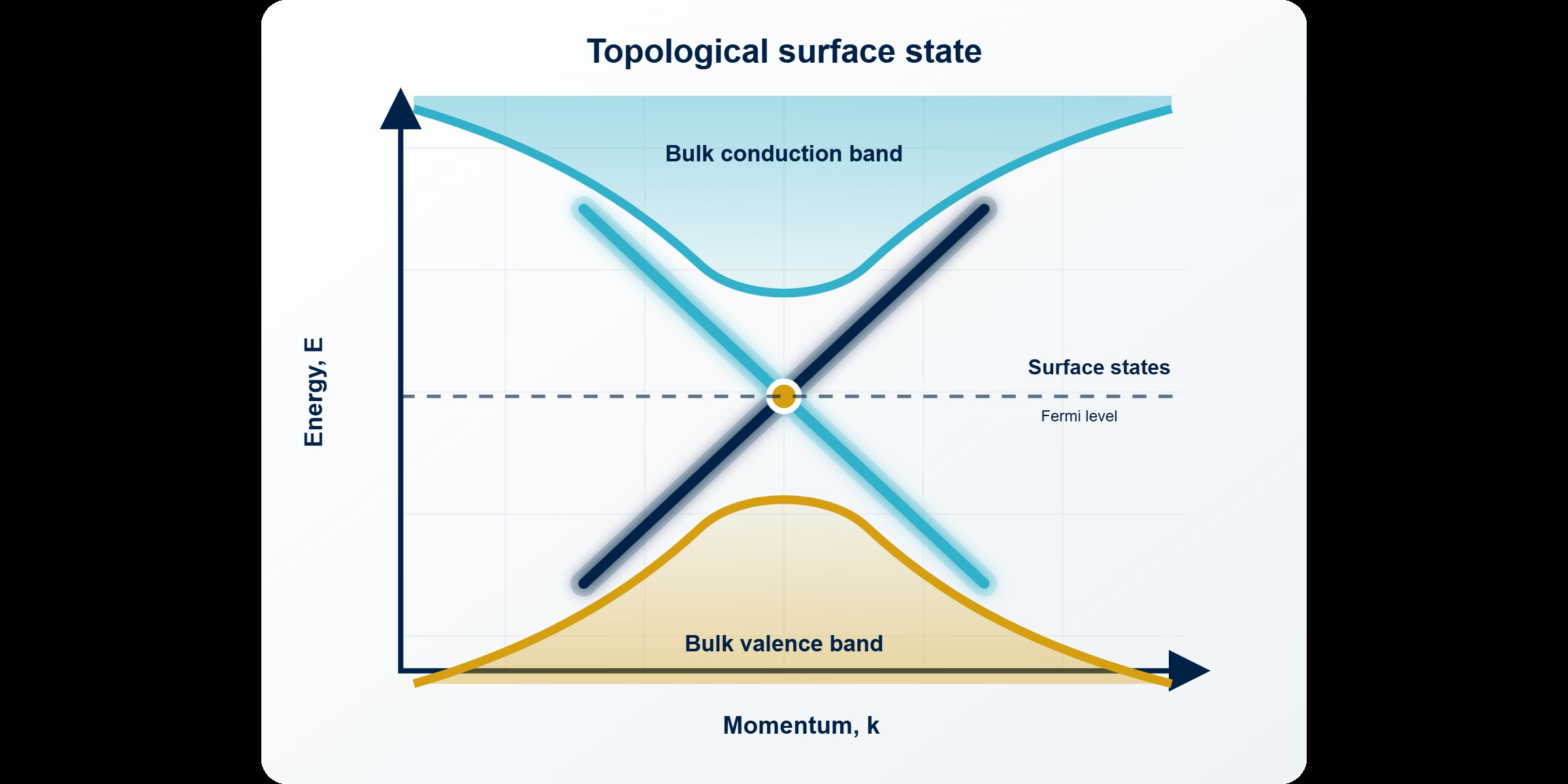
Topology is often most visible where a material ends. We image surface, step-edge, domain-wall, and defect-bound states to understand how global electronic topology produces local, experimentally accessible signatures.
Spin-polarized STM and quasiparticle-interference imaging let us connect real-space boundary modes to magnetic order and momentum-space band structure.
- Which boundary states are protected, and what protects them?
- How does magnetic order create, gap, or redirect topological states?
- Can engineered boundaries provide new routes to one-dimensional modes?
Magnetism & strongly correlated phenomena
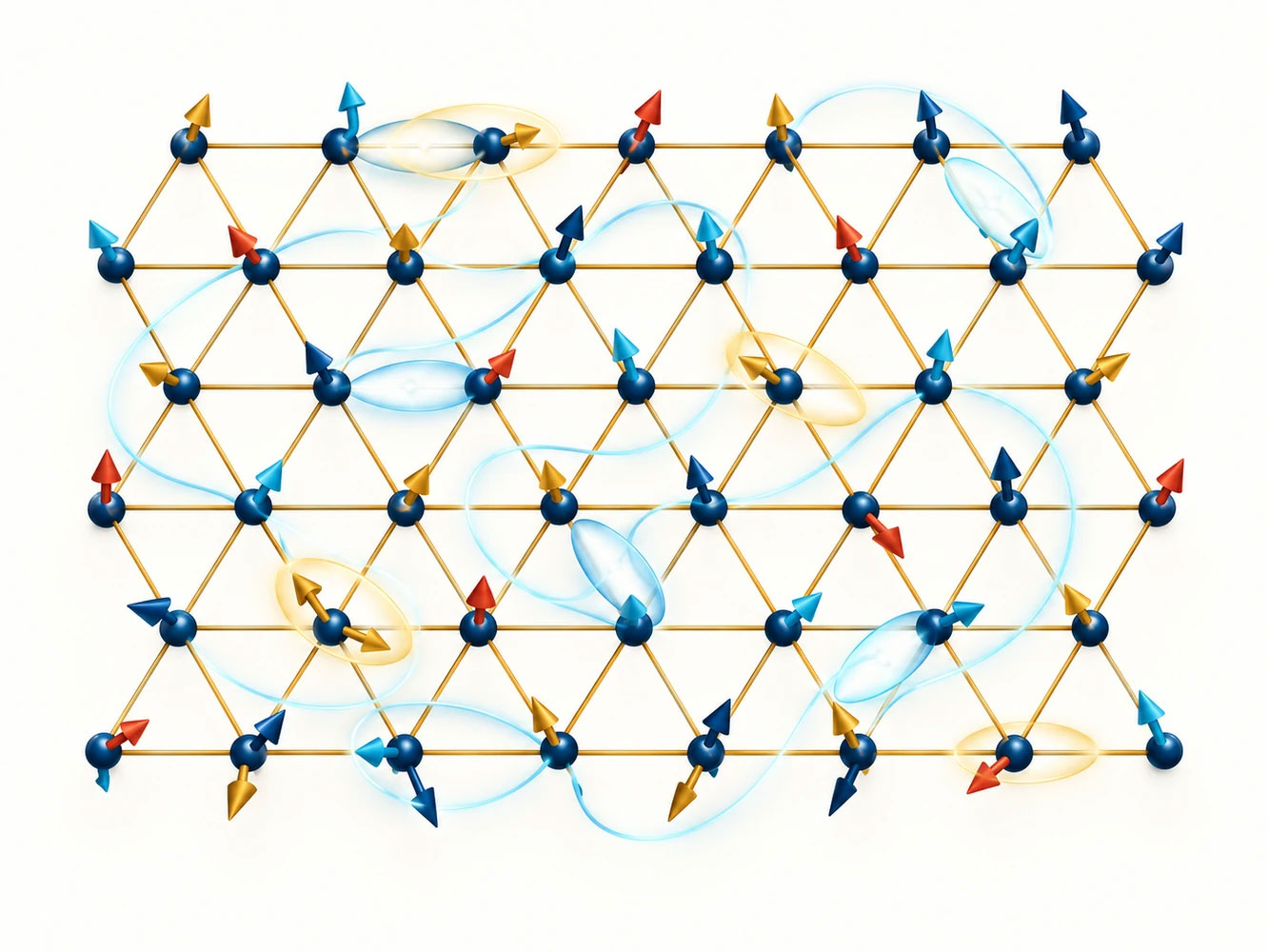
When interactions dominate, electronic states organize collectively into magnetism, charge order, pair-density waves, and other emergent phases. We map these states in real space and energy, following how they compete, coexist, and transform under controlled perturbations.
Kagome metals, magnetic topological materials, and layered van der Waals compounds provide rich settings in which geometry, correlations, and topology meet.
- How do intertwined orders reveal the interactions that stabilize them?
- What changes at atomic defects, domain walls, and phase boundaries?
- How can local control expose new collective quantum behavior?
Experimental toolkit
From fabrication to atomic-scale spectroscopy.
01
Ultra-low-temperature STM/STS
Atomic-resolution imaging and spectroscopy of low-energy quantum states.
02
Spin-polarized STM
Correlating magnetic order with local electronic structure and boundary modes.
03
Device fabrication
Cleanroom processing, focused-ion-beam methods, and nanoscale transport devices.
04
Complementary probes
ARPES, low-temperature transport, QPI, and theory-guided analysis.