• Menu
  • Skip to primary navigation
  • Skip to main content

Prof. Noam Soker

נועם סוקר

  • Home
  • News
  • Publications
    • Selected Papers
  • Research
  • CV
  • Popular lectures
  • Students
  • Photos
    • Documents
  • ILOT Club
  • Contact
  • Home
  • News
  • Publications
    • Selected Papers
  • Research
  • CV
  • Popular lectures
  • Students
  • Photos
    • Documents
  • ILOT Club
  • Contact

Noam Soker

Core collapse supernova remnants with ears (November 2016)

November 5, 2016 //  by Noam Soker

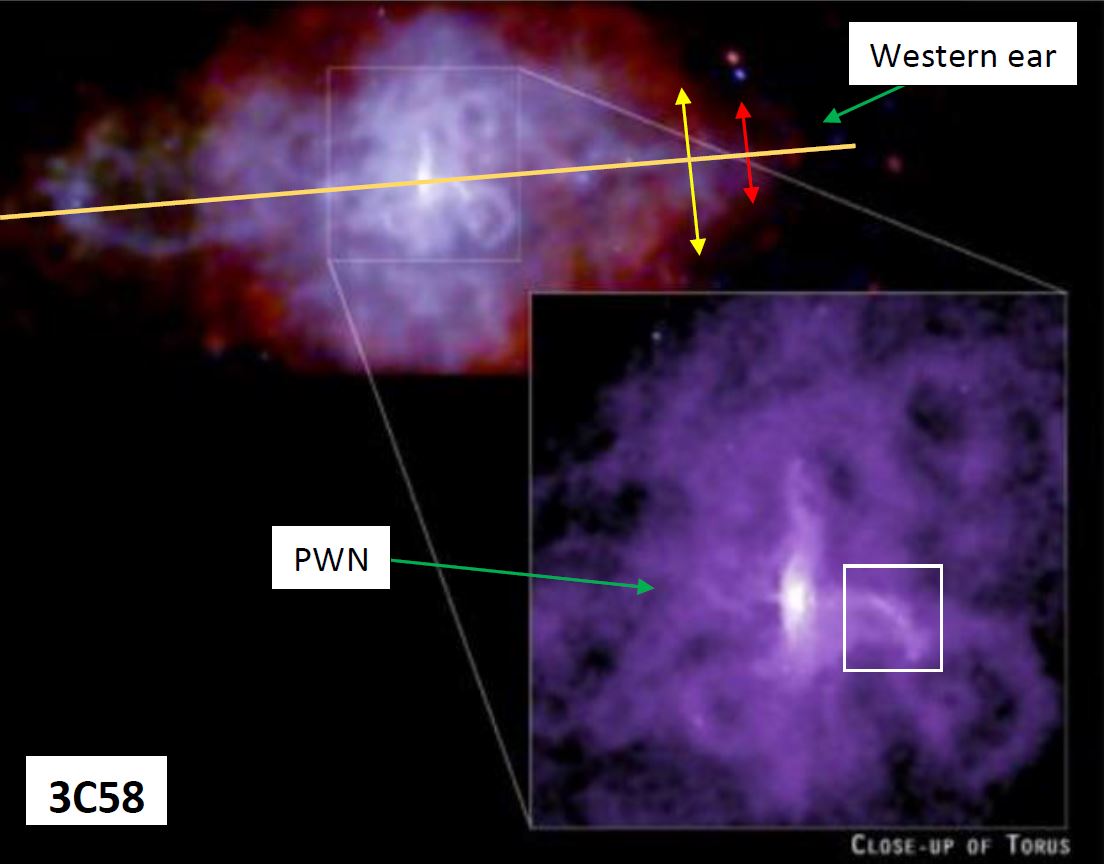
In a new paper Aldana Grichener and I study the morphologies of core collapse supernova remnantzfigcs (CCSNRs) and find that about third of CCSNRs have two opposite `ears’ protruding from their main shell, and that the typical energy that is required to inflate these ears is about 10 percents of the explosion kinetic energy. We argue that these properties are most compatible with the expectation from the explosion jet feedback mechanism (JFM). This study further supports the call for a paradigm shift from neutrino-driven to jet-driven core-collapse supernova mechanisms.
A popular summary of our research is in New Scientist.
Simulating the Grazing envelope evolution (July 2016)

July 21, 2016 //  by Noam Soker

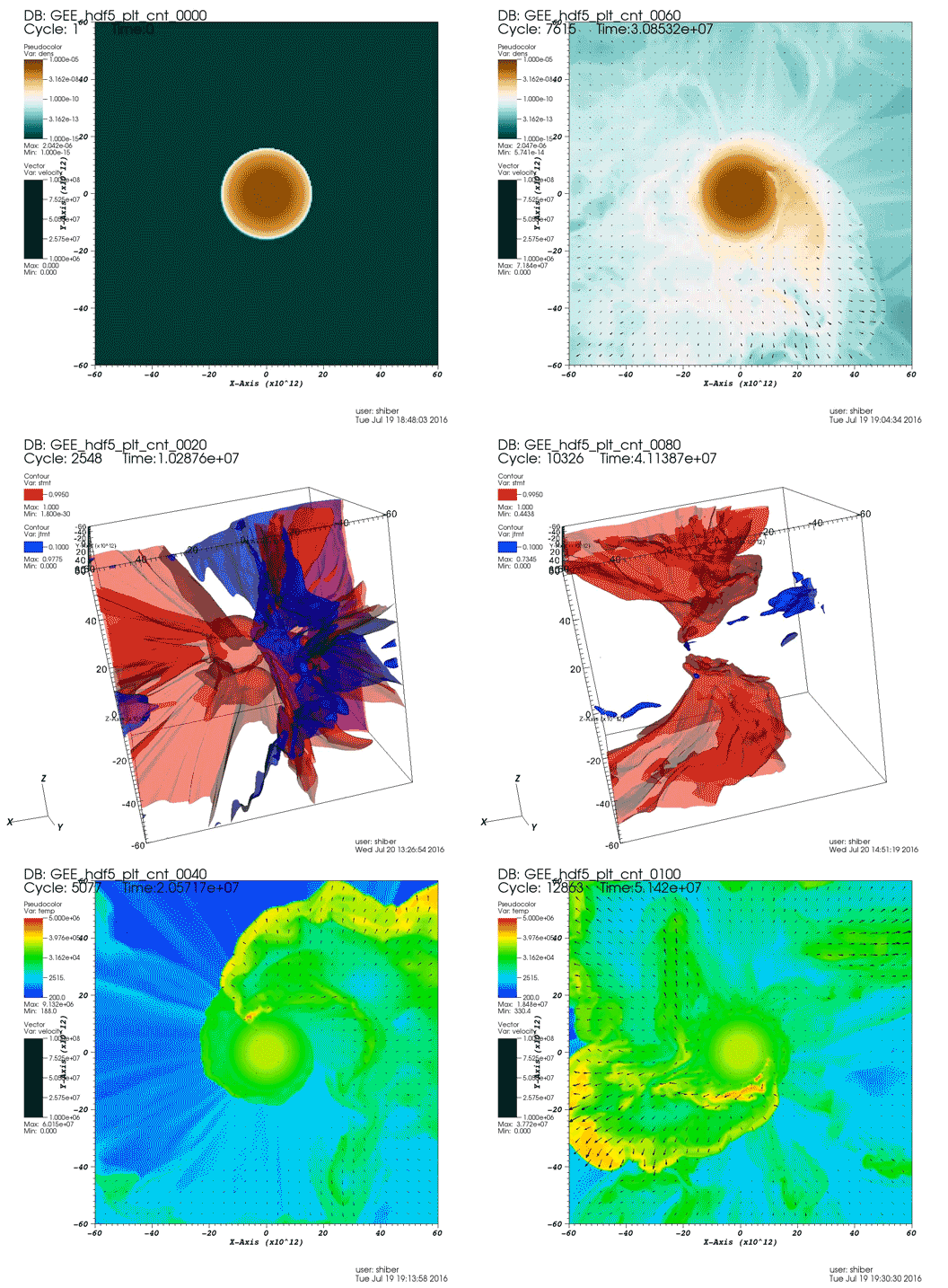
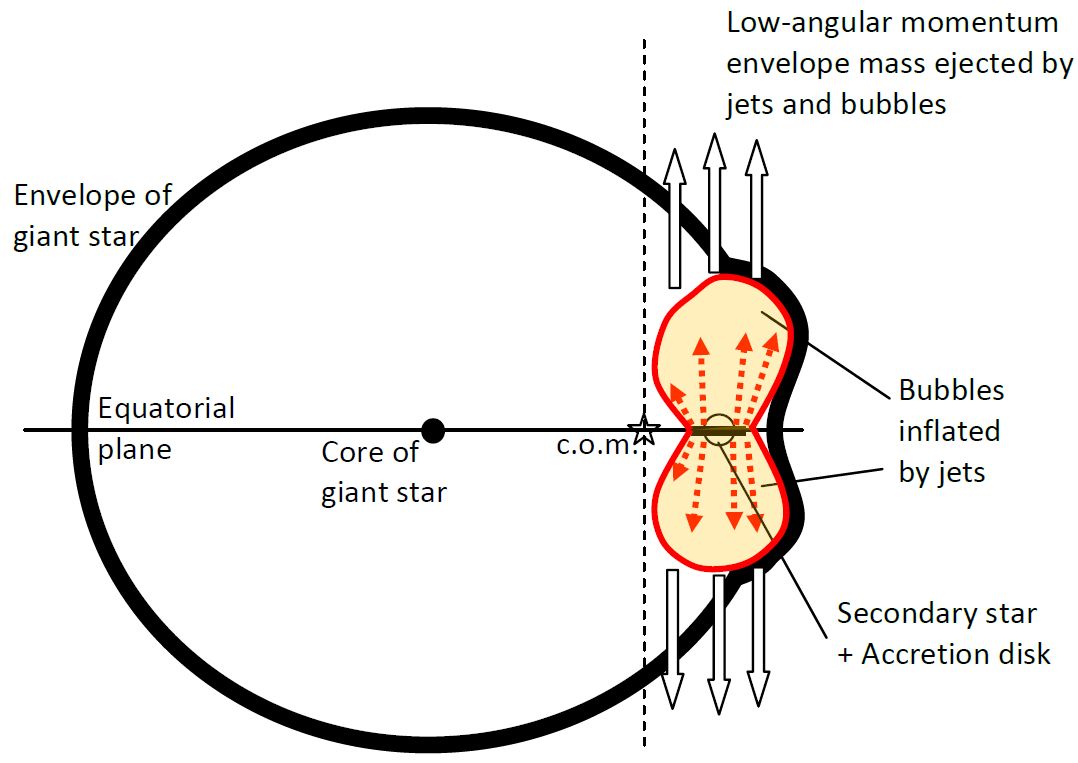
In a new paper Sagiv Shiber, Amit Kashi, and I, presented the first simulations of the grazing envelope evolution (GEE).  In the GEE jets launched by the secondary star efficiently remove the outer part of the giant envelope, while the secondary star grazes the surface of the primary giant star and spirals-in. 

Simulations: A secondary main sequence star enters the envelope of an asymptotic giant branch star of 3.4 solar mass. We assume that the secondary star launches two opposite jets perpendicular to the orbital plane.  There are three segments, each 1.5 years: (i) Density in the orbital plane; (ii) 3D image of jet material (blue) and ejected gas from the envelope of the giant primary star (red); (iii) Temperature in the equatorial plane.   GEE_ref6

Planetary nebulae shaped by a triple stellar system (June 2016)

June 29, 2016 //  by Noam Soker

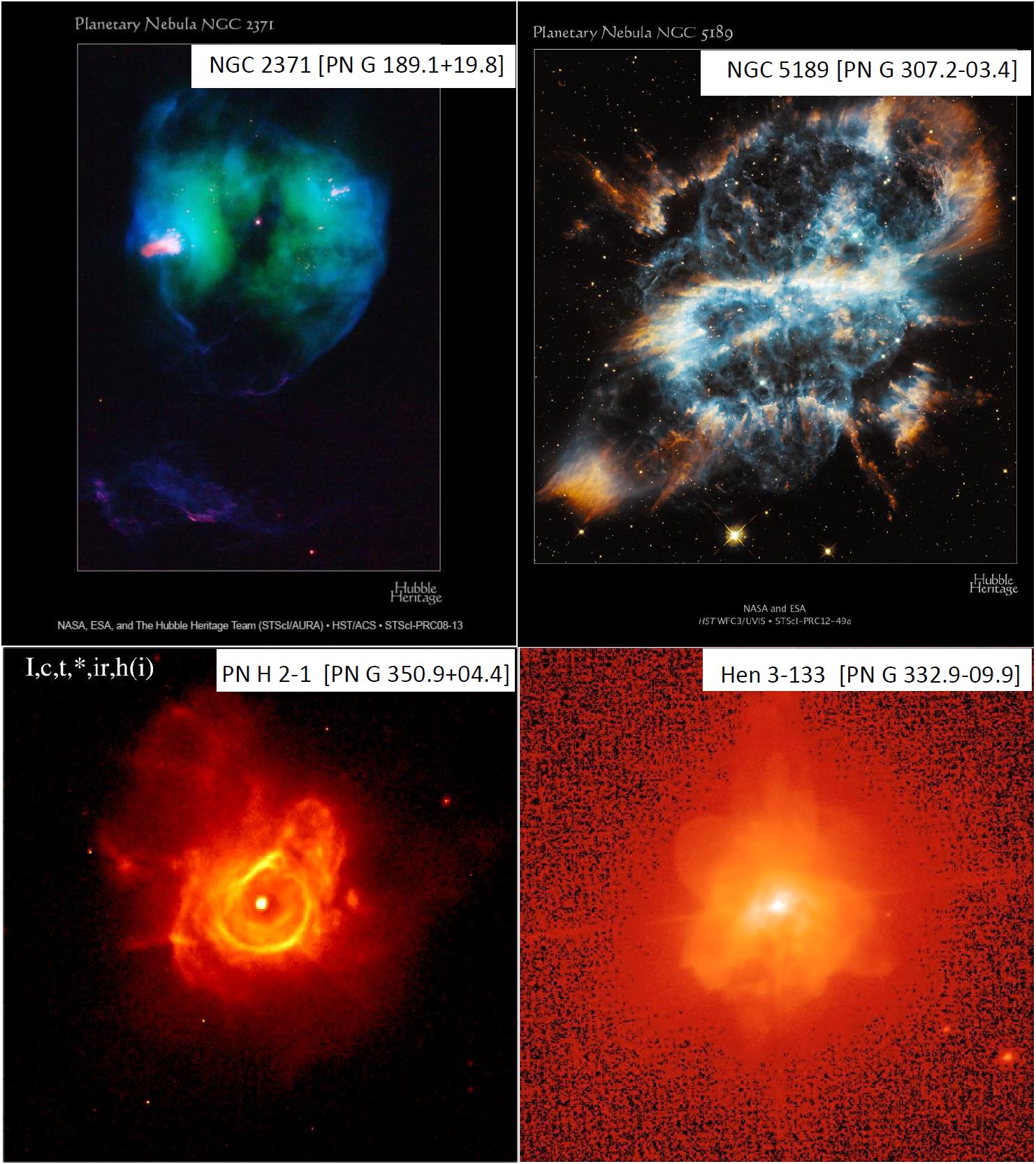
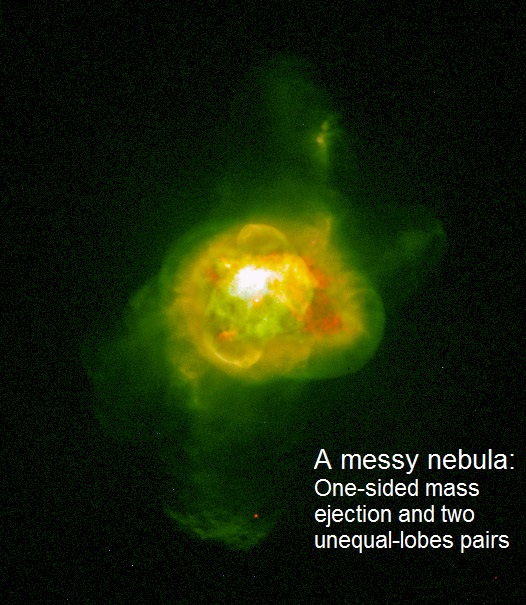
Ealeal Bear and I listed planetary nebulae with `messy’ morphologies, such as the four in the figure. We propose that the progenitor of such planetary nebulae are triple-stellar systems. (paper  posted on the arXiv.) 

TrueTripleN

The jet feedback mechanism (May 2016)

May 14, 2016 //  by Noam Soker

I posted a review paper on the operation of jets in a negative feedback mechanism in stars, galaxies, and clusters of galaxies. I argue that jets are more common that what is usually thought, and that they play an important role in powering many different kind of astrophysical objects.  (paper posted to the arXiv.)


Using ILOTs to reveal extended extra-solar Kuiper belt objects (January 2016b)

January 14, 2016 //  by Noam Soker

Ealeal Bear and I suggested that in the rare case of an Intermediate-Luminosity Optical Transient (ILOTs) event, evaporation of extra-solar Kuiper belt objects at distances of d~500 – 10000AU from the ILOT can be detected.  (paper posted on the arXiv.)

Launching jets from accretion belts (January 2016a)

January 14, 2016 //  by Noam Soker

Ron Schreier and I proposed that sub-Keplerian accretion belts around stars might launch jets. Our speculative belt-launched jets model has implications to a rich variety of astrophysical objects, from the removal of common envelopes to the explosion of core collapse supernovae by jittering jets. (paper posted to the arXiv)

Astrophysical Naturalness (October 2015)

November 6, 2015 //  by Noam Soker

I suggest that stars introduce mass and density scales that lead to `naturalness’ in the Universe (paper posted to the arXiv).  The combination of the stellar mass scale with the Planck mass and the Chandrasekhar mass leads to a ratio of order unity.  In the pure fundamental particles domain there is no naturalness; either naturalness does not exist or there is a need for a new physics or new particles. The `Astrophysical Naturalness’ offers a third possibility: stars introduce the combinations of, or relations among, known fundamental quantities that lead to naturalness.

From the media: Shaping planetary nebulae with planets (September 2015)

September 23, 2015 //  by Noam Soker

 In a superb  course in astronoThe elliptical planetary nebulae NGC 6826 (the colors are not real)my, Phil Plait lectures in a series of tens of 12-minutes long episodes on all topics of astronomy. In episode #30, White Dwarfs & Planetary Nebulae: Crash Course Astronomy #30, he mentions (7:20 minutes) my idea that many planetary nebulae might be shaped by planets.  

Phil Plait was my master student (University of Virginia, 1990), and we studied the planetary nebula NGC 6826 seen here. 

Shaping planetary nebulae by triple-stellar systems (August 2015)

August 25, 2015 //  by Noam Soker

I propose that some irregular `messy’ planetary nebulae (PNe) owe their morphologies to triple-stellar evolution where tight binary systems are tidally and frictionally destroyed inside the envelope of asymNGC 6210 is an example of a `messy' planetary nebula that has no symmetry at allptotic giant branch (AGB) stars. I estimate that about one in six non-spherical PNe is shaped by one of these triple-stellar evolutionary routes. See paper. 
Such is the PN on the right NGC 6210 taken from the HST site. 

Operation of the jet feedback mechanism (JFM) in intermediate luminosity optical transients (ILOTs) (July 2015)

August 4, 2015 //  by Noam Soker

Amit Kashi and I posted a new paper where we add the group of ILOTs as a new member Schematic drawing of the grazing envelope evolution with jets launched by the secondary star. of a large family of astrophysical objects whose activity is regulated by the operation of the negative jet-feedback mechanism (JFM).

  • « Go to Previous Page
  • Page 1
  • Page 2
  • Page 3
  • Page 4
  • Page 5
  • Page 6
  • Go to Next Page »

Copyright © 2025 · Prof. Noam Soker
Developed and maintained by the Web Development Group, Physics Department, Technion